- Market cap
- Revenue
- Net income
- Cash on hand
- Gross margin
- Net margin
- EPS
- P/E ratio
LAS VEGAS, NV / CRWE PRESS RELEASE / September 26, 2026 - Among the companies set to release financial results on Tuesday, September 29, are: Carnival Corporation Ltd. (NYSE: CCL), one of the world's largest cruise operators, is scheduled to announce its third-quarter 2026 earnings before the market opens. Analysts expect earnings of $1.35 per share on revenue of $8.39 billion. $CCL ended Friday at $22.25, gaining $0.46 (+2.11%). CarMax, Inc. (NYSE: KMX), the largest used-vehicle retailer in the United States, will release its fiscal second-quarter 2027 results ahead of the opening bell. Wall Street forecasts earnings of $0.72 per share on revenue of $7.02 billion. On Friday, $KMX closed at $57.21, rising $0.85 (+1.51%). Concentrix Corporation (Nasdaq: CNXC), a provider of customer experience and business process outsourcing services, is set to deliver its fiscal third-quarter 2026 financial results after the market close. Consensus estimates call for earnings of $2.81 per share on revenue of $2.48 billion. $CNXC finished Friday's session at $27.08, down $2.31 (-7.86%). THIS IS NOT A RECOMMENDATION TO BUY OR SELL ANY SECURITY OR DIGITAL ASSET. Please consult with a professional investment advisor before purchasing or selling any securities viewed on or mentioned herein. (Read Full Disclaimer)
WASHINGTON, D.C. / CRWE PRESS RELEASE / September 23, 2026 - U.S. Transportation Secretary Sean P. Duffy celebrated North Carolina’s first demonstration flight of its next-generation aircraft under USDOT’s Advanced Air Mobility Integration Pilot Program. North Carolina is the fifth location to launch under the Department’s initiative, following Texas earlier this month. Under Secretary Duffy, USDOT has created one of the largest real-world environments for testing electric vertical takeoff and landing aircraft (eVTOLs), autonomous planes, and drone technology. The first-of-its-kind testing initiative has the potential to create jobs, connect communities, and strengthen American leadership in aviation. Data from the pilot projects will be used by the Federal Aviation Administration (FAA) to develop new regulations that safely enable this futuristic technology at scale. “Under President Trump, we are unlocking the future of flight, one test flight at a time,” said U.S. Transportation Secretary Sean P. Duffy. “More than 120 years after the Wright Brothers took to the skies at Kitty Hawk, North Carolina is again leading the charge to transform how Americans move. Thanks to these tests, we are closer than ever to welcoming next-generation aircraft into our skies.” Joby Aviation, BETA Technologies and the North Carolina Department of Transportation are collaborating to test regional flight and medical transport capabilities between small local airports and a major hub. Last week, Joby’s remotely piloted J208 flew from Dare County Regional Airport (MQI) to Raleigh-Durham International Airport, while BETA’s electric ALIA aircraft completed multiple test flights between Raleigh Executive Jetport, Pitt-Greenville Airport and MQI. “Integrating these new aircraft into our airspace is an exciting step, and these demonstrations in North Carolina help ensure we do it safely,” said FAA Administrator Bryan Bedford. “We’re taking the data and lessons learned to build a system that connects communities and creates more opportunities for jobs and essential services.” “Rooted in our legacy as the First in Flight state, North Carolina is committed to shaping the future of aviation. Through eLIFT-NC, we’re exploring emerging technologies that can expand access, strengthen connections to rural communities and create new ways to move people and goods across our state,” said North Carolina Secretary of Transportation Daniel Johnson. “It is fitting that the next generation of aviation technology will be taking to the skies in North Carolina. Today’s milestone shows how our state, private industry, and federal government can partner to unleash the power of American innovation, and I am grateful that advanced air mobility technologies can join the list of storied aircraft the Old North State has helped foster,” said North Carolina Senator Ted Budd. “Aviation was born in Kitty Hawk, NC thanks to the determination and heroic efforts of the Wright Brothers. It is only fitting that the next generation of aircraft such as eVTOLs, autonomous planes and drones are tested in the birthplace of flight. Thank you to President Trump and Secretary Duffy for their leadership in the next frontier of aviation and for utilizing the legendary conditions of the Outer Banks to test this incredible technology,” said North Carolina Congressman Greg Murphy, M.D. "120 years ago, North Carolina led the world in innovat
WASHINGTON, D.C. / CRWE PRESS RELEASE / September 22, 2026 - The Federal Trade Commission strongly endorsed the Department of Education’s proposed reforms to promote competition among accreditation agencies. Increased competition among accreditors and lower administrative burdens could lower the cost and improve the quality of higher education for millions of American students. At the urging of President Donald J. Trump, the Department of Education invited comment on a proposed rule that seeks to “reenvision America’s postsecondary quality assurance system” by simplifying the process of recognizing new accreditors. In a comment filed on Monday, the directors of the Office of Policy Planning and Bureau of Competition applauded the Department’s initiative. Drawing on the Commission’s decades of experience in evaluating accreditation and occupational licensing schemes, the comment concludes that accreditation monopolies drive up tuition costs, limit consumer choice and stifle innovation. As the comment explained, incumbent accreditation authorities often have an incentive to impose rigid requirements and oppose more innovative, flexible standards because university interests exercise outsized influence over the process. For instance, 21 of 27 commissioners on the Middle States Commission on Higher Education are university administrators or faculty. Such individuals have strong incentives to adopt policies that prevent new, lower-cost education options that could reduce tuition and the demand for incumbent universities. Accreditation standards that cement the expensive status quo contribute to their job security and keep wages high, while raising tuition costs. The situation for accreditors of specific professional programs is often worse. Like institutional accreditors, many programmatic accreditors are influenced by higher education interests. These programmatic accreditors are also often guided by incumbent members of the profession with incentives to raise educational costs and create barriers for other lower-cost alternatives to enter the profession and become their competitors. The American Bar Association is a cautionary tale of the competitive harms that result from allowing incumbent professionals and higher education interests to dictate accreditation requirements. The ABA has a long history of using its law school accreditation monopoly to impose excessive costs and controversial ideological mandates. Commission staff have lauded recent initiatives by the Supreme Courts in Ohio, Florida, Texas, Tennessee and other states to reduce their reliance on ABA accreditation. The current comment commends the Department of Education’s push to encourage new accreditors to emerge and compete through accreditation standards that focus on delivering high-quality academic programs at a reasonable price. The Commission vote authorizing the filing of the comment was 2-0. The Federal Trade Commission works to <a href="https://www.ftc.gov/about-ftc/bureaus-offices
FTC alleged that the company, now known as Corpay, charged customers hidden or otherwise unauthorized fees and deceived users about savings from its fuel cards WASHINGTON, D.C. / CRWE PRESS RELEASE / September 17, 2026 - FleetCor and its CEO will pay $100 million to settle a Federal Trade Commission administrative action alleging that the company charged its customers, who overwhelmingly are small businesses, undisclosed fees in connection with their use of fuel cards that FleetCor falsely promised businesses would save them money. In a complaint first filed in federal court in 2019, the FTC alleged that FleetCor Technologies Inc., now known as Corpay Inc., and its CEO Ronald Clarke imposed a broad array of unauthorized fees that its customers never knew about and did not agree to pay, totaling hundreds of millions of dollars and harming tens of thousands of customers. In addition, FleetCor charged late fees to customers who had either paid on time or were prevented by FleetCor from paying on time. FleetCor also misrepresented the gas savings, fraud-control features, and fees associated with its fuel cards. “FleetCor deceived its small business customers by promising fuel savings that never materialized, while unfairly charging them hidden and unauthorized fees,” said Christopher Mufarrige, Director of the FTC’s Bureau of Consumer Protection. “In addition to the relief the FTC has obtained in federal court, this order will help return money to the customers the company took advantage of.” According to the complaint, FleetCor often waited to begin charging many fees until several billing cycles passed, making the fees less noticeable to consumers. The complaint also alleged that FleetCor’s invoices did not disclose that any fees were being charged, requiring customers to proactively view other account management reports. Even on those documents, many fees were obscured among other information or not listed at all. In 2023, a federal district court entered summary judgment for the FTC on all counts, finding that FleetCor had charged its customers hidden or otherwise unauthorized fees and misrepresented the gas savings and fees associated with FleetCor’s fuel cards. The court-imposed order permanently prohibits FleetCor from: billing a customer for any charge unless FleetCor has obtained the customer’s express informed consent and provided clear and unavoidable information about the charge; hiding material information about a charge behind a hyperlink; and making deceptive claims about its fuel cards. In 2026, a federal appeals court upheld the summary judgment against FleetCor on all counts and affirmed the permanent injunction against it. The court affirmed the judgment against Clarke on all but one count and vacated the injunction as to Clarke. As part of the settlement order with the FTC, FleetCor and Clarke will pay $100 million, which will be used to provide redress to the company’s business customers harmed by its practices. FleetCor and Clarke have also agreed not to oppose reimposition of a federal court injunction against Clarke. The Commission vote to accept the consent agreement was 1-0-1. FTC Chairman Andrew N. Ferguson is recused. The FTC will publish a description of the consent agreement in the Federal Register soon. The agreement will be subject to public comment for 30 days after publication in the Federal Register after which the Commission will decide whether to make the
FTC continues crackdown on competitors sharing company directors in violation of Section 8 of the Clayton Act WASHINGTON, D.C. / CRWE PRESS RELEASE / September 16, 2026 - The Federal Trade Commission took action to resolve antitrust concerns arising from a stock purchase agreement between two of the largest firearm manufacturers, Beretta Holding S.A. (Beretta) and Sturm, Ruger & Co. Inc. (Ruger), by accepting a proposed consent order that prevents anticompetitive entanglements between the two companies. Under the terms of the FTC’s proposed consent order, Beretta, a subsidiary of Upifra S.A., will be prohibited from appointing or nominating anyone to serve on Ruger’s board of directors unless that person is independent of Beretta. The order settles allegations that Beretta and Ruger’s proposed stock purchase deal would create an illegal interlocking directorate arrangement in violation of Section 8 of the Clayton Act, which generally prohibits directors and officers from serving simultaneously on the boards of competitors. The order marks the FTC’s latest enforcement action to crack down on companies sharing directors. Interlocking directorates can create opportunities for anticompetitive coordination between competitors, including through the sharing of competitively sensitive information. “Competition thrives best when the temptation to collude and share sensitive information isn’t on the table,” said Taylor C. Hoogendoorn, Deputy Director of the FTC’s Bureau of Competition. “Competition between gunmakers helps ensure that Americans can exercise their Second Amendment rights. The FTC’s order aims to preserve the independence of a significant American gunmaker and removes the risk of anticompetitive coordination between two of the largest firearm manufacturers by taking decisive action to prevent anticompetitive interlocking directorates from forming. This latest enforcement action serves as a warning that the FTC will take action to prevent anticompetitive board of director overlaps between competitors.” Under their proposed deal, Beretta is seeking to acquire Ruger stock to increase Beretta’s investment in Ruger to up to 25% of Ruger’s outstanding shares. The proposed deal would allow Beretta to appoint two members of Ruger’s board of directors, which the FTC alleges would create an illegal interlocking directorate arrangement. The FTC’s proposed consent order, which resolves the Commission’s competition concerns, prohibits Beretta from appointing, nominating or otherwise causing any person to be appointed or nominated to serve on Ruger’s board of directors unless such person is independent of Beretta. The proposed consent order also requires, among other provisions, that Beretta: Provide advance written notice to the Commission at least 15 days before appointing, designating, nominating, electing or otherwise causing any person to become a member of the board of directors of Ruger; and Not hire or enter into any financial or other relationship with any independent director nominated by Beretta and appointed to the board of directors of Ruger that would: (1) involve violating the independent director’s fiduciary duty or (2) involve the exchange of nonpublic information received about Ruger to Beretta, until such independent director has ceased serving on the board of directors of Ruge
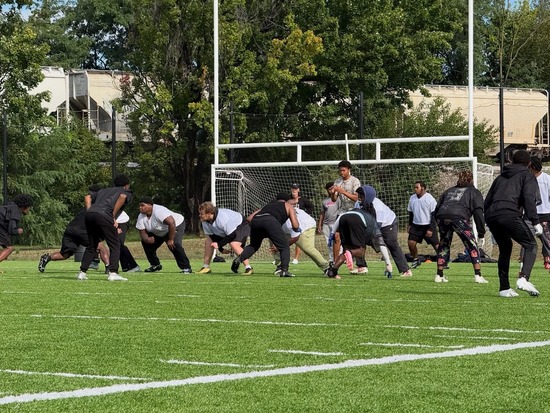
LAS VEGAS, NV / CRWE PRESS RELEASE / September 16, 2026 — Every week of a football season brings a new opponent, new formations and new challenges for players and coaches to study. For post-graduate athletes working to take the next step in their football careers, that weekly cycle provides experience with the preparation, communication and adjustments that can help them compete at the next level. Players still work on the fundamentals and systems they have practiced throughout the year, but each week gives them a chance to apply that work against a different team and a different set of challenges. Preparing for the Team on the Schedule The week often starts in the film room. Offensive players study defensive fronts, coverages and pressure looks, while defensive players focus on formations, personnel groupings, route concepts and tendencies. Special teams units also prepare for the returners and specialists they are likely to face. Those sessions give coaches a starting point for building the week's practice plan while helping players understand the situations they may encounter when they take the field. A player's responsibilities do not change simply because the opponent does, but the way those responsibilities are carried out can. A defensive player, for example, may have the same assignment within the defense while adjusting his alignment or communication based on the formation in front of him. Coaches can introduce those adjustments during meetings and film sessions before incorporating them into practice. Practice Becomes More Specific Once the coaching staff has identified the situations it expects to see, those situations can become part of the week's practice work. Offensive players run plays against the defensive fronts and coverages they have studied, while defenders rehearse the calls, alignments and adjustments associated with the opponent's formations and personnel. The value of that work comes through repetition and correction. Players can communicate, make checks and correct mistakes during practice so they are better prepared when the game begins. When an offensive look changes or a defensive formation presents a new problem, players can work through a response together rather than encountering the situation for the first time in a game. For post-graduate athletes, that process shows that preparation involves more than learning a playbook. It requires reviewing film, applying what was learned in practice and carrying those adjustments into competition. Opponent-Specific Work Sharpens Evaluation Opponent-specific work also gives coaches a clearer opportunity to evaluate how well players understand their responsibilities. A player may perform an assignment correctly during a general team period, but the same assignment can become more demanding when it has to be executed against live opponents. Those situations often require players to make quick decisions rather than simply repeat a technique they have drilled in practice. In each case, an opposing team gives coaches a chance to see how well players execute when decisions become quicker and circumstances are less predictable. Those lessons can carry into the following week. Coaches can review what happened in the previous game, identify where players handled their assignments well and where communication or execution needs work, then use those observations when preparing for the next opponent. That creates a connection between one week's game and the work that begins again the following week. Why a Full Schedule Matters For NJCP athletes, that weekly cycle is also part of learning how to prepare, compete and respond as a pos
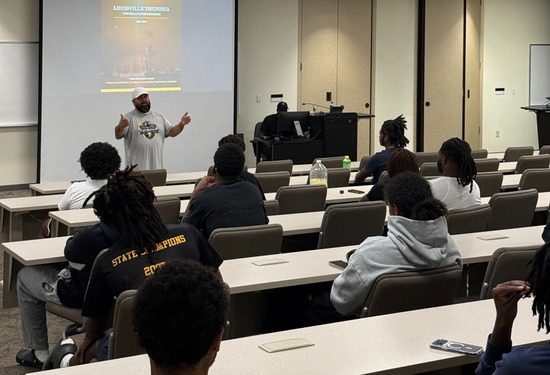
LAS VEGAS, NV / CRWE PRESS RELEASE / September 15, 2026 — A football game may only last a few hours, but preparation begins long before kickoff. For post-graduate athletes, being part of a football program means more than taking the field. The work that goes into preparing a team begins well before game time and continues through the final whistle and into preparation for the next competition. What Happens Before the Game Preparing for an opponent starts with film. Players and coaches review previous performances, identify tendencies and look for details that can influence the game plan. Those details carry into team meetings, where coaches work through the plan with their players and clarify what will be expected on the field. Players leave those meetings with a better understanding of their responsibilities and how the game plan applies to them. Every player has a role within the program and needs to be ready to contribute when the game calls for it. Preparation comes down to understanding that role, knowing how it fits into the game plan and being ready to execute when the moment arrives. Practice Turns the Plan Into Football Once the game plan is established, practice gives players a chance to work through it. Repetition allows coaches to correct technique, address mistakes and make adjustments while players become more familiar with what they will be asked to execute in competition. The details become especially important when teams work through situations that can change the outcome of a game. Short-yardage plays, goal-line situations, third downs, two-minute scenarios and special teams work require players to recognize the situation and execute without hesitation. Practice also gives teammates a chance to build communication and timing. Players learn how their roles connect with the people around them, and repeated work helps turn what was discussed in meetings into actions that can be carried out during competition. What Happens Away From Practice Recovery, equipment and the details surrounding a game all become part of the routine once practice ends. Players need to take care of their bodies, equipment needs to be ready and the remaining details need to be handled before the team arrives at the field. The work from meetings and practice also continues away from the field. Reviewing notes, revisiting key points and asking questions help players retain what they have been taught and recognize details that may matter once the game begins. Throughout that preparation, coaches establish expectations and players have to understand them, communicate with teammates and remain ready to carry out their roles. The preparation is shared across the team, but each player remains responsible for being ready when his number is called. When the Work Shows Up on the Field The formations, tendencies and situations discussed beforehand become real decisions once the game begins. Players have to recognize what is happening, communicate adjustments and execute the game plan under the pressure of live competition. Film and coaching observations after a game reveal where execution was strong and where corrections are needed, giving players and coaches a starting point for the next round of work. For post-graduate athletes in NJCP programs, the hours leading up to a game are part of the development that happens throughout a football season. The meetings,
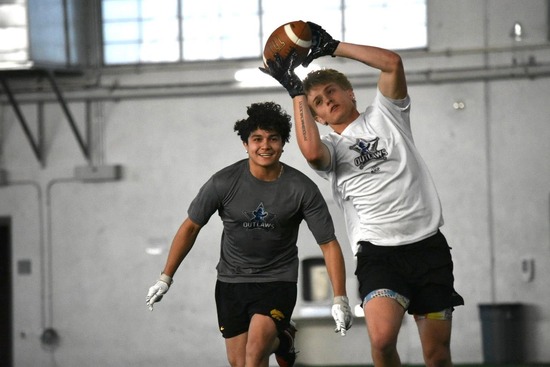
LAS VEGAS, NV / CRWE PRESS RELEASE / September 14, 2026 - The National Junior College Prep Football League is structured as a preparatory league, with a season designed to develop athletes for the next stage of their football and academic careers. That purpose shapes the season, with teams competing to win while giving athletes the experience and daily responsibilities that come with preparing for their next program. Many athletes join NJCP to continue playing after high school, build current film, and prepare for opportunities at four-year programs. What a Preparatory Season Contains Athletes practice weekly, attend position meetings, review film, and compete on a full schedule with staffs that include former high school head coaches, collegiate assistants, and former professional players. An NJCP season gives players time to work through development over a longer period, with opportunities to make corrections and test those corrections in live competition. Coaches can identify areas that need improvement, address them in practice, and then see whether the adjustment holds when players face a different opponent in competition. Athletes also have time to become more comfortable with their assignments, build communication with teammates, and adjust as the demands of the season change. That process of growth and correction continues from week to week as the season progresses. Preparation for one opponent can expose an area that needs work, subsequent practices provide an opportunity to address it, and another game gives the player a chance to demonstrate whether the change has carried over. Over the course of a full schedule, both players and coaches have more opportunities to see development take shape. Preparation Beyond the Field The preparation extends off the field, where an athlete at a four-year program faces demands that go beyond football. Players have to manage their schedules around practices and meetings, keep up with academic responsibilities, and meet the expectations of a coaching staff throughout the season. An athlete arriving at a four-year program without that experience is learning those demands while also learning a playbook and competing for a role. Athletes who have already spent a season working within that environment have had the opportunity to establish those routines before making the transition. What an Athlete Leaves With A full NJCP season can leave an athlete with current game film, months of coaching, experience preparing for weekly competition, and firsthand experience balancing academic and football responsibilities. For players who were not recruited out of high school, the league's objective is to give them another season to develop, compete, and build toward their next opportunity. Athletes and families interested in learning more about NJCP, available teams, and opportunities for the 2026 season can visit www.njcpfootball.com. About NJCP Football League: The National Junior College Prep Football League is the first national system for junior college prep football, designed to organize, showcase, and develop overlooked football talent across the United States. Built by former NFL athletes and veteran coaches, the NJCP provides a platform for player development, media exposure, and community impact for athletes across the nation. For more information, please visit www.njcpfootball.com or follow @NJCP_Football on our official social media channels: YouTube: NJCP Football X (Twitter):
LAS VEGAS, NV / CRWE PRESS RELEASE / September 12, 2026 - Several companies are scheduled to provide quarterly updates on Monday, September 14, including: High Tide Inc. (Nasdaq: HITI), a cannabis retailer and e-commerce company operating across North America, is scheduled to announce its fiscal third-quarter 2026 financial and operational results after the markets close. Analysts expect earnings of $0.02 per share on revenue of $194.58 million. $HITI ended Friday at $2.53, down $0.03 (-1.17%). Kestra Medical Technologies, Ltd. (Nasdaq: KMTS), a medical device company focused on wearable cardiac monitoring and therapy solutions, will report its fiscal first-quarter 2027 results following the closing bell. Wall Street forecasts a loss of $0.62 per share on revenue of $29.01 million. On Friday, $KMTS closed at $22.85, declining $0.72 (-3.05%). RF Industries, Ltd. (Nasdaq: RFIL), a manufacturer of interconnect products and communications infrastructure equipment, is set to release its fiscal third-quarter 2026 financial results before the market opens. Consensus estimates call for earnings of $0.20 per share on revenue of $23.28 million. $RFIL finished Friday's session at $10.32, gaining $0.13 (+1.28%). THIS IS NOT A RECOMMENDATION TO BUY OR SELL ANY SECURITY OR DIGITAL ASSET. Please consult with a professional investment advisor before purchasing or selling any securities viewed on or mentioned herein. (Read Full Disclaimer)
LAS VEGAS, NV / CRWE PRESS RELEASE / September 11, 2026 - The transition from high school football to a college roster represents a significant step in an athlete's development. Beyond the increased pace of the game, college programs demand an understanding of more complex schemes, consistent daily preparation, and a level of personal responsibility that many high school graduates are still developing. While individual workouts can build conditioning and maintain physical preparation, unorganized training typically cannot replicate daily technical coaching or scheme evaluation. The National Junior College Prep (NJCP) Football League provides a structured setting to bridge this gap, pairing coaches with post-graduate athletes who need additional guidance before entering a college program. Targeted Coaching and Positional Refinement. At the post-graduate level, coaches have the opportunity to see whether an athlete becomes a more complete football player over the course of a season. For coaches with collegiate and professional backgrounds, the prep level offers an opportunity to work directly with players who still have significant room to develop. Beyond refining technique, coaches assist athletes transition to positions that better suit their physical traits for college recruiting, such as converting a high school quarterback to receiver or adjusting a linebacker's defensive front responsibilities. Building Collegiate Football IQ. The difference between a high school graduate and a college-ready player often comes down to how quickly he can process and respond to what is happening on the field. Position coaches can spend an entire week working through a problem with a player, reviewing what happened on film, addressing the technique in practice, and then seeing whether the correction holds up when the player faces it again in competition. That instruction can show up in how a player handles the game itself. Players need to recognize a pre-snap key more quickly, communicate a protection or coverage adjustment, or maintain his technique when fatigue sets in. Over several weeks, coaches can see whether those corrections continue to hold up when opponents begin presenting different problems. Bridging the Gap to Four-Year Programs An athlete navigating a post-graduate year without a team structure may miss the daily instruction, competitive accountability, and current film that comes with organized football. The NJCP's Eastern and Western conferences give these players a full season of live competition, academic support, and mentorship. As the 2026 season progresses, the NJCP continues to strengthen its coaching and developmental infrastructure across the country, providing post-graduate athletes with the guidance needed to reach the next level. Athletes, coaches, and organizations interested in learning more about NJCP team opportunities, schedules, or partnerships for the 2026 season can visit www.njcpfootball.com. About NJCP Football League: The National Junior College Prep Football League is a national junior college prep football league designed to organize, showcase, and develop football talent across the United States. Built by former NFL athletes and veteran coaches, NJCP provides a platform for player development, media exposure, and community impact for athletes across the nation. For more information, please visit www.njcpfootball.com or follow @NJCP_Football on our official social media channels: <str