- Market cap
- Revenue
- Net income
- Cash on hand
- Gross margin
- Net margin
- EPS
- P/E ratio
Key Takeaways: Mortgage applications typically require income, asset, debt and employment documentation Self-employed applicants may need additional records, such as business tax returns and profit-and-loss statements Lenders use these documents to verify your financial information and assess borrowing eligibility Gathering paperwork early can help you spend less time tracking down documents later Whether you're buying a home or refinancing, there's one step every borrower shares: gathering the financial documents needed for a mortgage review. Lenders use these records to verify your income, assets, debts and employment history before making a lending decision. Getting organized early can help streamline the home loan application process and make it easier to respond to document requests as they come up. Income and Asset Documents Your lender will request documents to establish that you have the financial means to pay off your new mortgage alongside your other living expenses and long-term debts. Required documents can vary by lender and your personal circumstances, such as your employment type, but the following is a checklist of documents lenders typically ask for. Pay stubs W-2 forms and/or 1099 statements Any self-employment documents Statement of assets Pay Stubs Most lenders require pay stubs from the past two to three months to verify current employment and income. For borrowers employed by a company, pay stubs are typically the easiest way to provide proof of earnings. If a portion of your income comes from bonuses, overtime, commissions or other variable pay, your lender may request additional documentation. W-2 Forms and 1099 Statements Gather income documents from the past two years, including: W-2 forms (for salaried and hourly employees) 1099 forms (for independent contractors and certain self-employed individuals) Federal tax returns Lenders use these documents to confirm income, review earnings trends and gain a more complete picture of your financial situation. Self-Employment Documents If you are self-employed or own 25% or more of a business, you may need additional documentation to verify your income. Document requirements can vary based on your business structure and loan type, but may include: Business tax returns from the past two years Personal tax returns from the past two years Profit-and-loss statements Bank statements Proof of business operations such as a business license, Articles of Incorporation or operating agreement Statement of Assets Lenders review your assets to confirm you have the funds needed to close and to assess your overall financial stability. Be prepared to provide documentation for: Checking and savings accounts, typically for the most recent two months Retirement and investment accounts Down payment funds, including where the money is currently held Closing cost funds, if they are held in separate accounts Required reserves, which are funds remaining after closing that can cover future mortgage payments Any large deposits, if requested by the lender Gift funds, if applicable, along with a signed gift letter explaining: The gift amount The relationship between the donor and the buyer The address of the home being purchased A statement that the funds are a gift, not a loan that needs to be paid back Other Income Paperwork In certain situations, your lender may ask you to submit additional income-related documents: Child support payments: If you intend to use child support payments as income to qualify for your loan, then you will need to provide documentation of the child support arrangement. Many lenders require you to demonstrate that the payments will continue for a specified period after closing. Spousal support payments: If spousal support is part of your qualifying income, a divorce decree or similar court document may be required to verify the payment amount, terms and expected duration. Rental property income: In most situations, rental income can be counted toward qualifyin
Key Takeaways Jumbo loans exceed the conforming loan limits set by the Federal Housing Finance Agency (FHFA) and can be used for purchases and refinances, including cash-out refinances Choosing between a jumbo and a conforming loan depends on your financing needs, qualifications and available funds Conforming and jumbo loans differ in loan limits, down payment requirements and qualification standards Jumbo loans are designed for homebuyers and homeowners who need financing above conforming loan limits, whether they're purchasing a higher-priced home or refinancing an existing mortgage. But what is a jumbo loan, and how do jumbo loan requirements differ from those of a conforming mortgage? Below, we’ll cover current jumbo loan limits, the qualifications lenders look for and how jumbo financing compares with a conforming mortgage, so you can decide whether this type of home loan is right for you. What Is a Jumbo Loan? A jumbo loan, also known as a jumbo mortgage, is a non-conforming home loan with an amount that exceeds the conforming loan limit set by the FHFA. A borrower may want to consider a jumbo home loan when a conforming loan won't provide enough financing for a home purchase, refinance or cash-out refinance. Jumbo loans can be used to purchase or refinance a range of property types, including: Single-family homes (attached/detached) Planned unit developments (attached/detached homes with a homeowners association) Condominiums One- to two- unit primary residences and investment properties One-unit second homes or vacation homes While jumbo loans are typically associated with higher-priced homes, they're increasingly common in areas where home values exceed local conforming loan limits. What is a Jumbo Loan? Take me to the series What is a Jumbo Loan? Take me to the series Jumbo Loan Limits The Federal Housing Finance Agency (FHFA) sets conforming loan limits each year, and those limits can vary depending on where you're buying a home. If your loan amount exceeds the applicable limit for your area, you'll typically need a jumbo mortgage. The conforming loan limit for 2026 for a one-unit property is: $832,750 in most counties Up to $1,249,125 in certain high-cost housing markets Not sure what limit applies where you're buying? Your mortgage lender can help you determine the current county loan limit, or you can look it up using the FHFA conforming loan limit values map. How to Qualify for a Jumbo Loan Because jumbo mortgages involve larger loan amounts than conforming mortgages, qualification requirements are often more stringent. Borrowers generally need to meet certain credit, asset and income requirements to qualify. High Credit Score Your credit score is an important factor in any mortgage application, but you’ll typically need a higher credit score to qualify for a jumbo loan compared to a standard conforming loan. A credit score of 700 or higher is common for many jumbo mortgage programs. Higher scores may improve your chances of qualifying and could help you secure more favorable loan terms. Cash Reserves Lenders generally require borrowers to have assets available after closing to cover several months of mortgage payments. Depending on the loan amount, some jumbo loan programs may require up to 24 months of reserves. Debt-to-Income Ratio Your debt-to-income ratio tells lenders how much of your monthly income goes to debt. A low ratio can demonstrate that you have more room in your budget to take on a mortgage payment. Many jumbo loan lenders look for a DTI ratio of 45% or less, although some programs may allow a higher DTI (up to 50%) for well-qualified borrowers. Documentation and Appraisal Requirements To show your qualifications for a jumbo loan, you will likely need to show more documentation than for a typical mortgage loan. You may be asked to show up to two years’ worth of tax returns, W-2s and more. Some lenders also require a second appraisal. Jumbo Loans vs. Conforming Loans A jumbo loan is considered a n
Many homeowners look for ways to make the most of their monthly budget, build long-term wealth and fund their personal goals. Refinancing your mortgage is a path that can potentially help you do all three. Whether you’re looking to lower your interest rate, change your loan type or access your home’s equity, refinancing your mortgage can create new opportunities to save or better fit your current financial goals. This guide explains what refinancing is, how it works, the costs involved and the loan options available. It also provides the insights you need to decide whether refinancing is the right move for your financial situation. Key Takeaways Refinancing replaces your existing mortgage with a new loan featuring updated terms You can refinance to lower your interest rate, change your loan duration or access home equity Understanding closing costs and qualification requirements helps you choose the right option for your situation What Is Mortgage Refinancing? Refinancing means taking out a new home loan to replace your existing mortgage. You still own the same home, but your loan terms change. The new mortgage pays off the original debt entirely. Moving forward, you make a single monthly payment based on the interest rate and timeline of your new loan. How Does Refinancing Work? The refinancing process is similar to applying for your original mortgage. It involves several steps: Application: You begin by submitting an application to the lender. Documentation: You will need to provide financial documents, such as proof of income and assets. Lender review: The lender will review your application and documentation, including your credit score, income and debt-to-income (DTI) ratio to ensure you qualify. Documentation requirements and qualification criteria can vary by loan type. Approval and closing: Once approved, you will review the new loan terms and sign the final paperwork to close on the new loan. After closing, the lender uses the funds from your new mortgage to pay off your old one. Your new payment schedule will begin shortly after. Types of Mortgage Refinancing Different situations call for different loan options. Lenders offer a range of solutions designed to help you meet your needs and make the most of your mortgage. Traditional Refinance (Rate-and-Term) A traditional rate-and-term refinance changes the interest rate, loan term or both. Homeowners often use this option to secure a lower interest rate and reduce their monthly payment. You can also use a traditional refinance to change your loan type. For example, switching from an adjustable-rate mortgage (ARM) to a fixed-rate mortgage gives you consistent monthly payments. If you currently have a Federal Housing Administration (FHA) loan, refinancing to a conventional loan may allow you to eliminate monthly mortgage insurance if you have at least 20% equity and meet qualification requirements. Cash-Out Refinance A cash-out refinance replaces your current mortgage with a new, higher-balance loan. You receive the difference between the two loan amounts in cash. Homeowners frequently use these funds for home improvements, education expenses or debt consolidation. Tapping into your home equity this way typically provides funds at a lower interest rate than most credit cards or personal loans. Streamline Refinance Unlike a traditional rate-and-term refinance, which requires full documentation and an appraisal, a streamline refinance is a simplified mortgage refinance designed to help borrowers improve their loan terms, such as lowering their interest rate or changing loan type, usually with less paperwork and fewer requirements. It reduces documentation and underwriting, often making the process faster and easier, but it still involves closing costs. The primary streamline programs available include: FHA Streamline Refinance Designed for borrowers with an existing FHA loan, an FHA Streamline Refinance helps lower your rate and monthly payment or switch from an adjustable
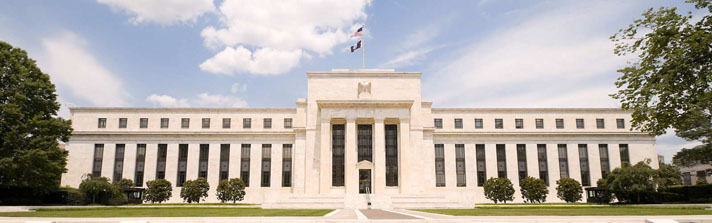
Key Takeaways: The Federal Reserve sets a target range for short-term interest rates, not mortgage rates Broader market conditions shape mortgage rates Fixed and adjustable-rate loans respond differently to rate changes Fed decisions can influence borrowing costs over time Knowing how rates work can help you plan your next move What Is the Federal Reserve? The Federal Reserve, often called the Fed, is the central bank of the United States. It plays a key role in keeping the financial system running smoothly and the economy on stable ground. What Does the Federal Reserve Do? The Fed helps shape economic conditions by managing how money flows through the economy. Some of its core responsibilities include: Setting a target range for the federal funds rate: The Fed sets a target range for this rate, which is the interest rate banks charge each other for very short-term loans. Promoting stable prices: It works to keep inflation at a manageable level so the cost of goods and services doesn’t rise too quickly. Supporting employment: The Fed aims to foster conditions that encourage job growth and a steady labor market. Maintaining financial stability: It monitors the banking system and helps prevent disruptions that could impact the economy. How the Federal Reserve Influences Mortgage Rates The Federal Reserve doesn’t directly set mortgage rates, but its decisions help shape the broader interest rate environment. Short-Term Rates Set the Foundation When the Fed adjusts the target range for the federal funds rate, it shapes broader short-term interest rates and influences banks’ borrowing and lending costs. Those changes impact how financial institutions price loans and investments, which in turn affects borrowing costs across the economy. Market Expectations Drive Mortgage Rates Mortgage rates are more closely tied to longer-term factors, like bond yields and inflation expectations. In particular, they often move in line with the yield on 10-year U.S. Treasury notes or mortgage-backed securities (MBS), which reflect how investors view future economic conditions and Fed policy. Fixed Vs. Adjustable-Rate Mortgages: How Each Responds to Fed Changes Not all home loans respond to rate changes in the same way. The impact depends on the type of mortgage you have or are considering. Here’s how the two most common options compare: Fixed-rate mortgage: Your interest rate stays the same for the life of the loan. That means your principal and interest payment remains steady, even as rates shift in the broader market. Adjustable-rate mortgage (ARM): Your rate starts fixed for a set period, then adjusts at regular intervals based on current market conditions. As rates change, your monthly payment can go up or down. Because of their structure, ARMs tend to respond more quickly to changes tied to short-term rates. Fixed-rate mortgages are influenced more by longer-term trends, making them less sensitive to short-term shifts. How Fed Decisions Can Affect Homebuyers When the Fed changes its benchmark interest rate, it can influence the overall rate environment. In turn, this can affect mortgage pricing and how much home you can comfortably afford. Lenders use current market conditions, along with your financial profile, to determine the rate you’re offered. Mortgage rates can move lower when investors shift toward safer assets like mortgage-backed securities, which can reduce the cost of funding home loans. When rates are lower, you may qualify for a higher loan amount or see a lower monthly payment. Lower rates can also increase buyer demand and put upward pressure on home prices in certain markets. When rates rise, your buying power can tighten. Monthly payments may be higher, but home-price growth may cool in some markets, depending on local supply and demand. A pre-approval can help you understand how much you may qualify to borrow and give you a clearer sense of your homebuying budget as rates change. How Fed Policy Impacts Homeowners For homeowne
Key Takeaways REO homes are bank-owned properties that did not sell at a foreclosure auction Bank-owned homes may offer lower purchase prices but often require repairs and are typically sold as-is Buyers can often finance REO purchases using conventional, FHA or VA loans Thorough inspections, title reviews and lender pre-approval are important steps when buying an REO property If you’re in the market for a new home, a bank-owned property can be a good option under the right circumstances. When you take the time to understand the Real Estate Owned (REO) process, you might uncover some special opportunities unique to this type of home purchase. While foreclosed and bank-owned homes often require more renovations — and a different type of negotiation — than other options on the market, they can also come at a significant discount. If you’re willing to work through some of the nuances of the post-foreclosure market, you can set yourself up for a great deal. What Is a Real Estate Owned Home? REO, which stands for Real Estate Owned, refers to a property whose ownership has been transferred to a bank or lender after foreclosure. These properties are also commonly referred to as bank-owned homes. Many REO homes are sold “as is,” which means buyers may need to handle repairs or renovations after closing. However, they may also be priced competitively compared to traditional listings. What Is an REO Foreclosure? An REO foreclosure is the stage that follows the foreclosure process, when a home becomes lender-owned after failing to sell at a foreclosure auction. Once the lender takes ownership, the property is usually prepared for resale through standard real estate channels. For buyers, REO foreclosures can offer a more familiar buying experience than auction properties, often including inspections, financing options and the ability to work with a real estate agent. What Is a Foreclosed Home? A foreclosed home is a property that a lender has repossessed due to the homeowner’s failure to make mortgage payments. When a borrower defaults on their mortgage — typically involving a failure to make payment for more than 120 days without any reasonable resolution — the lender initiates legal proceedings to take property ownership through foreclosure. The home is then typically sold at a public auction to recover the outstanding loan balance. If it doesn’t sell at auction, the property becomes Real Estate Owned (REO) by the lender, who will market and sell it to minimize losses. How REO Homes, Foreclosures and Bank Owned Homes Differ A foreclosed home does not automatically become an REO property. It may pass through pre‑foreclosure, short sale and a foreclosure auction first; if it doesn’t sell, only then does it become Real Estate Owned (REO) under the lender’s ownership. Although REO homes are often called foreclosures, they are technically post‑foreclosure properties. Here’s a breakdown of the different stages of distressed properties: Pre-Foreclosure (Short Sale) Properties Homeowners in financial distress may sell the property for less than the mortgage balance, with lender approval. This is called a short sale. Financing is typically accepted, but the process requires negotiations between the buyer, seller and lender, which can be lengthy and uncertain. To avoid any unwelcome surprises, buyers should first thoroughly inspect the property. Foreclosure Auction When a homeowner defaults, the property may be sold at a public foreclosure auction. These homes are sold “as-is” to the highest bidder, often requiring immediate payment via cash or cashier’s check. Buyers assume responsibility for any liens or occupants and typically cannot inspect the interior before purchase. Bank-Owned (REO) Properties If a property doesn’t sell at auction, it becomes Real Estate Owned (REO) by the lender. Buyers can purchase a post-foreclosure home through traditional real estate channels, often with financing options available. These types of homes are still sol
Key Takeaways: PITI stands for principal, interest, taxes and insurance, which are the primary components of a monthly mortgage payment Property taxes, homeowners insurance, mortgage insurance and HOA dues can significantly affect your total monthly housing costs Estimating your full mortgage payment before making an offer can help you set a realistic homebuying budget Buying a home can be one of the most rewarding (and largest) investments you will ever make. Estimating your monthly mortgage payment well in advance of purchasing can help you make smart budgeting decisions. Many prospective buyers find it valuable to calculate a home’s monthly mortgage payment — before making any serious commitment — to gauge whether it’s a good fit for their budget. Read on to learn more about mortgage payments, including what PITI and PITIA are and what your payments cover. What Is a Mortgage Payment? A mortgage payment is the amount you pay each month toward your home loan. The exact amount depends on several factors, including: Loan amount: Larger loans generally result in higher monthly payments. Loan term: Shorter loan terms typically have higher monthly payments than longer terms. Interest rate: Higher interest rates generally increase monthly payments. Depending on your loan and property, your monthly payment may also include additional housing-related costs, such as property taxes, homeowners insurance and homeowners association (HOA) dues. What Is PITI? The acronym PITI stands for the four core components of a monthly mortgage payment, specifically: Principal Interest Taxes Insurance Changing any of these four factors will affect your estimated monthly payment. You may also see PITIA. The "A" stands for association dues. While association dues are not part of every home purchase, if applicable, they do affect your total monthly housing costs. Here’s a closer look at each component of PITIA. Principal The principal is the amount you borrow from the lender. For example, if you have a $200,000 mortgage, the principal is $200,000. Each mortgage payment includes a principal payment, which reduces your loan balance. Interest Interest is what a lender charges for borrowing money. Your interest rate is one of the factors that determine your monthly mortgage payment. In general, lower rates result in lower payments, while higher rates result in higher payments. Early in the loan term, a larger portion of your payment goes toward interest, while a smaller portion goes toward principal. As the loan balance declines, more of each payment is applied to principal and less to interest. If you make extra principal payments, you may reduce the total amount of interest you pay over the life of the loan. Let's look at a $200,000 mortgage with a 30-year fixed rate of 6%. For simplicity, this example excludes taxes and insurance. The estimated monthly payment for the loan is $1,199. Here’s how that amount breaks down between principal and interest over the first few years of a mortgage: Timeframe Principal Interest Month 1 $199 $1,000 Month 24 $223 $976 Month 48 $252 $947 This pattern continues throughout the life of the loan, with principal making up a larger share of each payment as the loan balance declines. Taxes The “T” in PITI refers to your property taxes. These are taxes assessed by government agencies and are used to fund municipal services such as water treatment, road maintenance and public schools. It is common for lenders to set up an escrow account for property taxes, in which the lender collects a monthly payment designated for your taxes and holds the total until your annual taxes are due. Your annual property taxes are divided by 12 and added to the monthly principal and interest amount you are paying. Property taxes can vary greatly by area (and in some regions, they can be quite costly), and they may increase over the years. As soon as you identify a property you are interested in, it’s crucial to determine the exact local rate before
Key Takeaways: Assumable mortgages allow buyers to take over a seller's existing home loan and its terms FHA and VA loans are the most common types of assumable mortgages Buyers typically need lender approval and may need to cover the seller's equity with cash or additional financing Assuming a mortgage may offer savings when the existing loan has a lower interest rate than current market rates Most homebuyers get a brand-new mortgage at today’s rates. But there’s another option that can benefit both buyer and seller in the right conditions: the assumable mortgage. Instead of taking out a new loan, the buyer takes over the seller’s existing one — sometimes at a much lower interest rate. What Is an Assumable Mortgage? An assumable mortgage is a type of home financing that lets a buyer take over the seller’s existing mortgage, including its original terms. This can be appealing in certain rate environments, but there are a few important details to understand. With an assumable mortgage, the buyer may take on: The existing interest rate The current loan balance The remaining repayment period Because the loan is being transferred, the buyer typically needs to meet the lender’s requirements and receive approval before the assumption can move forward. This option can be especially attractive when the seller’s mortgage rate is lower than current market rates. In that scenario, the buyer may benefit from more favorable monthly payments compared to taking out a new loan. That said, there’s usually a gap to cover. Buyers are generally responsible for paying the seller for any equity built up in the home. Equity is the difference between the home’s current value and the remaining mortgage balance, and it’s often paid in cash or financed separately. What Is an Assumable Loan? An assumable loan is a mortgage that can be transferred from a home seller to a buyer, allowing the buyer to take over the existing loan rather than secure a new one. Not all mortgages are eligible for assumption. Even if a mortgage is assumable, the lender still needs to review and approve the buyer before the transfer can be completed. Which Types of Mortgages Are Assumable? The loans that most often qualify for assumption are VA and FHA loans, which are backed by the federal government. Assumable FHA Loans Federal Housing Administration (FHA) loans qualify for assumption because they’re free from the restrictions of due-on-sale clauses that are common in conventional mortgages. The due-on-sale clause requires the full balance of the loan to be paid upon transfer of property ownership. FHA Mortgage Assumption Requirements Buyers wishing to assume an FHA mortgage typically must meet the lender’s credit and income guidelines. Many lenders look for scores in the high-500s to low-600s range. Similar to a conventional loan, your debt-to-income ratio, including the assumed loan’s payment, cannot exceed 43% (although in special circumstances, it can go as high as 50%). Assumable VA Loans The United States Department of Veterans Affairs (VA) has long offered one of the best home loan programs available for qualifying veterans, active military and their dependents. VA loans often qualify for mortgage assumptions. VA Mortgage Assumption Requirements To qualify for a VA mortgage assumption, keep the following in mind: You must meet all VA standards for creditworthiness and income, and the assumption must be approved by both the VA and the lender All mortgage obligations are assumed by the buyer, up to and including the obligation to repay the VA should you default on the loan You will be responsible for paying a “VA funding fee” equal to 0.5% of the current loan balance (only the principal amount) If you’re considering secondary financing, the VA has specific rules about how second liens can be structured, which you can discuss with your lender Conventional Mortgages and Assumable Loans Under certain circumstances, conventional mortgages can also be assumable, but most of tho
Your backyard is where you unwind, grill and spend time with family and friends. Landscaping and design shape how your backyard looks, but a “smarter” approach can improve how it works. Smart devices connect to your home’s Wi-Fi so that you can control them from your phone or other devices. Features like lighting that turns on at dusk, scheduled irrigation or outdoor security can add convenience to your daily life. Not only can smart upgrades make your space more comfortable and functional now, but they may also support your home’s value. When you're ready to sell, these are the types of upgrades buyers tend to notice. Before starting a larger smart tech project, focus on features you’ll use regularly and that can appeal to future buyers. Key takeaways Smart backyard upgrades may increase your property's resale value and attract buyers Functional improvements like outdoor lighting and smart irrigation may offer high returns Highly complex or niche tech systems may not appeal to the average buyer You can finance outdoor renovations using a cash-out refinance or a home equity loan How Smart Backyard Features Can Boost Home Value Home appraisers consider how well a property functions and how features like outdoor living spaces contribute to its overall value. Outdoor areas designed for dining, relaxing or entertaining can increase overall desirability. Adding smart features can build on that. From reducing routine maintenance to giving you more direct control over features like lighting and irrigation, these updates can deliver practicality and potential financial return. Smart Backyard Upgrades With the Most Value Potential Certain outdoor improvements consistently yield better returns than others. Focus on professionally-installed upgrades that blend functionality with broad appeal. 1. Outdoor Lighting for Safety and Curb Appeal The National Association of Realtors reports that lighting is an easy way to boost your curb appeal. Proper lighting extends the hours you can enjoy your backyard and Smart LED lighting systems allow you to adjust brightness and color right from your phone. You can also set schedules so your landscape lighting turns on at sunset. A well-lit exterior provides an extra layer of safety, highlights your landscaping features and always looks inviting. 2. Irrigation Systems That Save Water (and Money) A lush green lawn requires consistent watering. Smart irrigation controllers connect to local weather forecasts and adjust watering schedules automatically. They skip watering on rainy days and increase output during dry spells. You’ll save water, lower your utility bills and help maintain the health of your landscaping. 3. Integrated Outdoor Security Systems Smart outdoor cameras and motion sensors help keep your space secure, sending alerts directly to your phone when someone enters your yard. 4. Smart-Controlled Pools and Spas In some markets, a swimming pool can be a strong selling feature, but it does require upkeep. If you already have a pool, adding a smart control system makes it much easier to manage. You can adjust the water temperature, turn on the spa jets and monitor chemical levels from a mobile app. Spend more time swimming and soaking up the sun, and less time on maintenance chores. 5. Automated Shade and Comfort Features You can’t control the weather, but you can control your comfort. Motorized pergolas and smart retractable awnings provide shade at the touch of a button. Some advanced systems even feature wind and rain sensors that automatically retract the awning during bad weather. These additions make your patio usable throughout the seasons. 6. Smart Outdoor Kitchens and Grilling Tech An outdoor kitchen creates an ideal environment for hosting. According to Zillow research reported by Forbes, homes with outdoor kitchens can sell for roughly 2.2% more than otherwise similar properties. Adding smart technology elevates the outdoor cooking experience. For example, Wi-Fi-enabled grills allow yo
If you’ve been looking at homes around $200,000, you may have asked yourself: Could I actually afford this? Buying a home is a major financial commitment, and this price point can be a practical way for many buyers to enter the market. But the real question is what level of income supports that purchase. Income matters, but it’s only part of the picture. Lenders also look at your debt, credit and overall financial profile to determine what you can comfortably afford. Here’s a breakdown of what it takes to qualify for a $200,000 home, so you can understand the numbers and plan your next steps. Key takeaways: A $200K home can be within reach, but affordability depends on your finances, location and overall housing costs Most buyers need about $55,000 to $75,000 in annual income to afford this price point The 28/36 rule is a common guideline lenders use to evaluate affordability Your monthly payment includes more than the loan, with taxes, insurance and loan type all impacting costs Is a $200K Home a Realistic Starting Point? Many buyers wonder if a $200,000 property is an attainable goal. The answer depends heavily on where you want to live and the type of property you have in mind. While the national median home price exceeds $400,000, a $200,000 budget still holds purchasing power in many regions. In high-cost areas like coastal California or major Northeast metros, $200,000 usually won’t stretch to a single-family home. However, it may still be enough for a smaller condo, a fixer-upper or a property in an outlying suburb or more rural county. Why This Price Point Is Often More Within Reach A few factors make a $200,000 home price point easier to manage: Lower Upfront Investment A $200,000 home typically requires less cash at closing. A 20% down payment equals $40,000, but depending on the loan, you may be able to put down much less — as little as 3.5% with an FHA loan or even 0% with a VA loan. However, you’ll still need to account for additional closing costs and fees. Lower Loan Amount Borrowing less can make it easier to qualify for a mortgage, depending on your income and overall financial profile. More Manageable Monthly Payments A lower loan amount generally leads to lower monthly mortgage payments. Reduced Total Housing Costs Property taxes, insurance and related expenses may be lower at this price point. A General Income Range for a $200K Home Many lenders and housing experts suggest keeping your total monthly housing costs around 28% of your gross income and keeping all debts at or below 36%, often called the 28/36 rule. Depending on your interest rate, down payment, taxes and insurance, that typically means you might need somewhere around $55,000–$75,000 in annual income to realistically afford a $200,000 home. But your exact number may be higher or lower based on your situation. The 28/36 rule The 28/36 rule is a guideline lenders use to evaluate how much home you can afford based on your income and existing debt. 28% for housing costs: Your total monthly housing expenses, including your mortgage payment, property taxes and insurance, should stay at or below 28% of your gross monthly income (what you earn before taxes and deductions). 36% for total debt: Your total monthly debt payments — including any credit cards, car loans, student loans and your future mortgage — should not exceed 36% of your gross monthly income. Lenders use this information to calculate your debt-to-income (DTI) ratio, which measures how much of your income goes toward debt. A lower DTI shows you have more room in your budget to take on a mortgage and may help you qualify for better loan terms. How Much Is a Mortgage on a $200K House? A mortgage is simply the amount you borrow to buy the home, not the monthly payment. For a $200,000 home, your mortgage depends on your down payment: If you put down 20% ($40,000), your mortgage is $160,000 If you put down 10% ($20,000), your mortgage is $180,000 If you put down 3.5% ($7,000), your mortgage is $
You’ve found a potential home in the $500,000 range. Now comes the important part: figuring out if your income can support that. While your salary is the starting point, the real test of affordability is how your income will be able to manage the full monthly financial commitment of homeownership. We break down the details below to help you see how various costs stack up and what kind of earnings are typically needed to make this house a sustainable part of your budget. Key takeaways: A $500,000 home often requires roughly $120,000–$160,000 in annual income Monthly costs vary widely depending on interest rate, down payment, loan type, taxes and insurance Qualifying on paper is different from comfortably affording your full monthly budget Improving credit, boosting your down payment and exploring programs can make this price point more manageable A $500K Home Means Different Things For Different Buyers To understand what income is required to support a $500,000 home, it helps to know there isn’t a standard monthly cost. In fact, two buyers at this price point can end up with very different payments depending on their loan details, upfront investment and where they’re buying. Here are some of the key factors that shape your monthly payment — and the income you’ll likely need. Interest rates: A lower mortgage rate reduces your monthly payment and lowers the total amount of interest paid over the life of the loan. Even a half-percent difference in your rate can shift your monthly costs by hundreds of dollars, directly impacting the salary you need to qualify for the loan. Down payment: The amount of money you put down upfront affects your loan amount. A larger down payment means you have to borrow less, resulting in a smaller monthly payment. Credit score: A higher credit score demonstrates financial reliability to lenders, often allowing you to secure a lower interest rate. This can significantly reduce your long-term borrowing costs. Loan term: The length of your loan also matters. A shorter-term loan, like a 15-year mortgage, will have higher monthly payments but lower total interest costs. A longer-term loan, such as a 30-year mortgage, will have lower monthly payments, making it more manageable for some budgets. Property taxes, insurance and any applicable HOA fees: Your monthly payment typically includes property taxes and homeowners insurance, which can vary based on your location and your home’s value. If the property is part of a homeowners association, you may also need to pay HOA fees separately. Higher costs in these areas can reduce your overall purchasing power. Together, these factors explain why two buyers looking at the same $500,000 home can end up with very different monthly payments and different income needs. Beyond The Mortgage: What You’re Really Paying Each Month So how do those factors translate to your monthly payment? A mortgage refers strictly to the loan amount you borrow to purchase a home. The amount you borrow is the purchase price minus your down payment. For example, putting 20% down on a $500,000 home means you contribute $100,000 upfront and borrow the remaining $400,000. Your monthly payment, however, includes several components beyond just repaying the borrowed amount. Lenders use the acronym PITI to describe these costs: Principal: The portion that goes toward paying down your loan balance Interest: The cost of borrowing the money from your lender Taxes: Property taxes collected by your local government and usually held in an escrow account Insurance: Homeowners insurance that protects your property against damage or liability Mortgage insurance may be required You may also need to pay mortgage insurance depending on your loan type and down payment. Conventional loans typically require private mortgage insurance (PMI) if your down payment is less than 20%. You can usually request to remove PMI once you build sufficient equity in a home and your loan balance drops to 80% of the property's valu